The Great Abolitionist
THE GREAT ABOLITIONIST: Charles Sumner and the Fight for a More Perfect Union is the first major biography of Charles Sumner to be published in over fifty years. It tells the story of one of the most influential non-presidents in American history (included in this exclusive club were Benjamin Franklin, Alexander Hamilton, Susan B. Anthony, and Martin Luther King, Jr.) – and far more influential than many presidents – a leader who exhibited true courage and authenticity.
Voyage of Mercy
In Voyage of Mercy, Stephen Puleo details the remarkable story of the mission that inspired America to donate massive relief to Ireland during the potato famine, which sparked America’s tradition of providing humanitarian aid around the world.

American Treasures
American Treasures charts the creation and little-known journeys of these priceless American documents. From the risky and audacious adoption of the Declaration of Independence in 1776 to our modern Fourth of July celebrations, it shows how the ideas captured in these documents underscore the nation’s strengths and hopes, and embody its fundamental values of liberty and equality
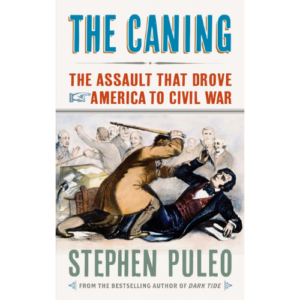
The Caning
Early in the afternoon of May 22, 1856, ardent pro-slavery Congressman Preston S. Brooks of South Carolina strode into the United States Senate Chamber in Washington, D.C., and began beating renowned anti-slavery Senator Charles Sumner with a gold-topped walking cane. The Caning: The Assault That Drove America to Civil War tells the incredible story of this transformative event. While Sumner eventually recovered after a lengthy convalescence, the compromise had suffered a mortal blow.

A City So Grand
The second half of the nineteenth century is, quite simply, a breathtaking period in Boston’s history. Unlike the frustrations of our modern era, in which the notion of accomplishing great things often appears overwhelming or even impossible, Boston distinguished itself between 1850 and 1900 by proving it could tackle and overcome the most arduous of challenges and obstacles with repeated, and often resounding, success.
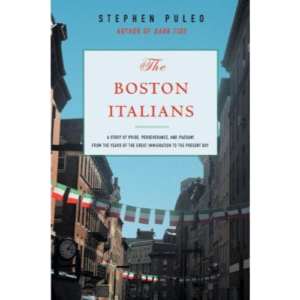
The Boston Italians
Focusing on this first and crucial Italian enclave, The Boston Italians describes the experience of Boston’s Italian immigrants as they battled poverty, illiteracy, and prejudice (Italians were lynched more often than members of any other ethnic group except African Americans); explains their transformation into Italian Americans during the Depression and World War II; and chronicles their rich history in Boston up to the present day.
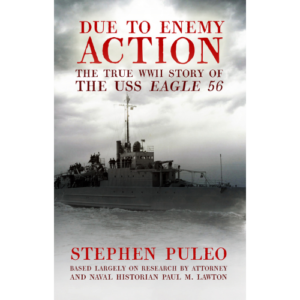
Due to Enemy Action
Due to Enemy Action tells for the first time a World War II story that spans generations and straddles two centuries, a story that begins with the dramatic Battle of the Atlantic in the 1940s and doesn’t conclude until an emotional Purple Heart ceremony in 2002.
Dark Tide
Dark Tide uses the gripping drama of the Great Molasses Flood of 1919 to examine the sweeping changes brought about by World War I, Prohibition, the anarchist movement, immigration, and the expanding role of big business in society. To understand the flood is to understand America of the early twentieth century – the flood was a microcosm of America. This dramatic event encapsulated something much bigger, a lens through which to view the major events that shaped a nation.